<?xml version="1.0" encoding="UTF-8"?>
<!--Generated by Squarespace V5 Site Server v5.13.594-SNAPSHOT-1 (http://www.squarespace.com) on Thu, 11 Jun 2026 21:13:27 GMT--><rdf:RDF xmlns:rdf="http://www.w3.org/1999/02/22-rdf-syntax-ns#" xmlns:rss="http://purl.org/rss/1.0/" xmlns:dc="http://purl.org/dc/elements/1.1/" xmlns:sy="http://purl.org/rss/1.0/modules/syndication/" xmlns:admin="http://webns.net/mvcb/" xmlns:content="http://purl.org/rss/1.0/modules/content/" xmlns:cc="http://web.resource.org/cc/"><rss:channel rdf:about="http://slazar.com/thoughts/"><rss:title>SL - A Blog by Spencer Lazar</rss:title><rss:link>http://slazar.com/thoughts/</rss:link><rss:description></rss:description><dc:language>en-US</dc:language><dc:date>2026-06-11T21:13:27Z</dc:date><admin:generatorAgent rdf:resource="http://www.squarespace.com/">Squarespace V5 Site Server v5.13.594-SNAPSHOT-1 (http://www.squarespace.com)</admin:generatorAgent><rss:items><rdf:Seq><rdf:li rdf:resource="http://slazar.com/thoughts/2014/6/19/amazons-dynamic-perspective-gamings-history-will-repeat-itse.html"/><rdf:li rdf:resource="http://slazar.com/thoughts/2014/1/9/what-exactly-is-ibms-smarter-planet.html"/><rdf:li rdf:resource="http://slazar.com/thoughts/2014/1/7/parting-ways-with-winners.html"/><rdf:li rdf:resource="http://slazar.com/thoughts/2014/1/6/hypothesis-the-best-vcs-are-happily-married.html"/><rdf:li rdf:resource="http://slazar.com/thoughts/2014/1/2/the-great-purge.html"/><rdf:li rdf:resource="http://slazar.com/thoughts/2010/9/26/presentation-matters-pitchdeck-ui.html"/><rdf:li rdf:resource="http://slazar.com/thoughts/2010/9/10/passing-on-people.html"/><rdf:li rdf:resource="http://slazar.com/thoughts/2010/8/28/data-portability-the-limits-to-geo-shrinkage.html"/><rdf:li rdf:resource="http://slazar.com/thoughts/2010/8/1/finding-equilibrium-in-the-flow.html"/><rdf:li rdf:resource="http://slazar.com/thoughts/2010/7/4/publicity-is-not-cheap.html"/></rdf:Seq></rss:items></rss:channel><rss:item rdf:about="http://slazar.com/thoughts/2014/6/19/amazons-dynamic-perspective-gamings-history-will-repeat-itse.html"><rss:title>Amazon’s Dynamic Perspective: Gaming’s history will repeat itself</rss:title><rss:link>http://slazar.com/thoughts/2014/6/19/amazons-dynamic-perspective-gamings-history-will-repeat-itse.html</rss:link><dc:creator>Spencer Lazar</dc:creator><dc:date>2014-06-19T14:05:57Z</dc:date><dc:subject></dc:subject><content:encoded><![CDATA[<p><span class="full-image-block ssNonEditable"><span><img style="width: 900px;" src="http://slazar.com/storage/Bezos%20Fire%20Phone.jpg?__SQUARESPACE_CACHEVERSION=1403186898769" alt="" /></span></span></p>
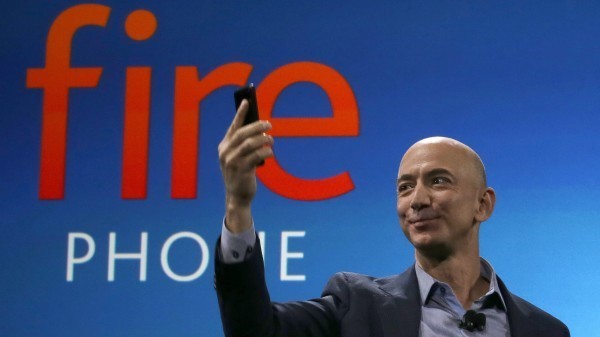
<p class="paragraph-first post-p">Yesterday, Amazon made its long-anticipated&nbsp;<a class="post-pAnchor post-anchor" rel="nofollow" href="http://techcrunch.com/2014/06/18/amazon-announces-the-fire-phone/" target="_blank">announcement</a>&nbsp;that it will formally be entering the smartphone phone market, with what it&rsquo;s calling the&nbsp;<a class="post-pAnchor post-anchor" rel="nofollow" href="http://www.amazon.com/dp/product/B00EOE0WKQ/ref=km_3ipQL4405RcGFLqV35hVrA==?tag=googhydr-20&amp;kw=amazon%20fire%20phone" target="_blank">Fire Phone</a>. As expected from Amazon, the product promises (and will likely deliver) a lot. At a starting price of $199 for a 32GB phone with a one-year AT&amp;T contract, the device provides (a) an image, voice, and text recognition-based service for buying products its users encounter in the world; (b) a full-year of the company&rsquo;s incredible Amazon Prime service (read: free music, movies, TV shows, books, and two-day shipping on physical products); (c) it&rsquo;s innovative &ldquo;Mayday&rdquo; video chat-based customer support service; (d) free cloud storage for every photo taken with the phone; and more&hellip;</p>
<p class="post-p"><a id="0305"></a>But one of the most talked about features of the new device is what Amazon is calling&nbsp;<strong class="post-pStrong"><em class="post-pEm">Dynamic Perspective</em></strong> &mdash; or what some are calling the &ldquo;3D&rdquo; user experience supported by the phone (demo&nbsp;<a class="post-pAnchor post-anchor" rel="nofollow" href="http://techcrunch.com/gallery/heres-what-the-amazon-fire-phones-crazy-3d-head-tracking-looks-like/" target="_blank">here</a>&nbsp;&amp; foreshadowed by&nbsp;<a class="post-pAnchor post-anchor" rel="nofollow" href="http://www.theverge.com/2013/10/3/4799170/amazon-patent-history-illustrates-3d-phone-ideas" target="_blank">a patent</a>from Bezos himself in 2008). Sample applications of the technology include new views of stadium seats in a ticket purchase experience on StubHub and zooming into real estate photos on Zillow by simply moving the phone closer to your face. Dynamic Perspective is enabled by the phone&rsquo;s four front-facing cameras which detect where a user&rsquo;s head is at any given time, updating 60 times per second. They&rsquo;ve even included infrared lights in each camera to ensure that the technology works in the dark. There are many technologists who will do a better job of explaining the mechanics of the Dynamic Perspective, but I&rsquo;d like to focus on what I believe to be it&rsquo;s motivations and implications. I believe they are huge. And it starts with gaming.</p>
<p class="post-p"><a id="ba38"></a>If you think about the past 10 years across the technology landscape, there have been at least 3 major digital platform transitions that have occurred:<strong class="post-pStrong"><em class="post-pEm">social</em></strong>&nbsp;(Facebook),&nbsp;<strong class="post-pStrong"><em class="post-pEm">mobile</em></strong>&nbsp;(Apple &amp; now Google),&nbsp;<strong class="post-pStrong"><em class="post-pEm">tablet&nbsp;</em></strong>(Apple, Amazon, &amp; now Google). And on each platform, there has been one category that has led the charge in mass market consumer adoption: gaming &mdash; accounting for the plurality of platform revenue. When new platforms emerge, they start as pretty boring places to &lsquo;hang out&rsquo; until application developers are able to sync their teeth into the potential of the new form factor or user experience. On Facebook, other than sharing articles, status updates, and photos, when Facebook&nbsp;<a class="post-pAnchor post-anchor" rel="nofollow" href="http://en.wikipedia.org/wiki/Facebook_Platform" target="_blank">released it&rsquo;s Platform in 2007</a>, there was not much to do. But within a short few months, with the birth of companies like Zynga,&nbsp;<a class="post-pAnchor post-anchor" rel="nofollow" href="http://www.playdom.com/" target="_blank">Playdom</a>, and&nbsp;<a class="post-pAnchor post-anchor" rel="nofollow" href="http://www.crunchbase.com/organization/playfish" target="_blank">Playfish</a>, people were hooked. They made games that you were meant to play with your friends, something you could not really do with the same ease before Facebook. When&nbsp;<a class="post-pAnchor post-anchor" rel="nofollow" href="http://en.wikipedia.org/wiki/App_Store_%28iOS%29" target="_blank">Apple opened up its App Store in 2008</a>, similarly there was not much interesting going on. Remember&nbsp;<a class="post-pAnchor post-anchor" rel="nofollow" href="https://itunes.apple.com/us/app/fart!!/id375248440?mt=8" target="_blank">fart</a>&nbsp;&amp;&nbsp;<a class="post-pAnchor post-anchor" rel="nofollow" href="https://itunes.apple.com/us/app/ibeer-free-drink-beer-on-your/id475905823?mt=8" target="_blank">beer</a>&nbsp;apps? As expected, the legacy gaming companies were slow to develop much of substance. Then came Rovio, makers of Angry Birds. The game took advantage of the snackable nature of mobile entertainment. It leveraged simple hand gestures like drag-and-release to power it&rsquo;s slingshot. When Apple launched the iPad in 2009, it was met with&nbsp;<a class="post-pAnchor post-anchor" rel="nofollow" href="http://appleinsider.com/articles/11/10/21/steve_jobs_was_annoyed_and_depressed_over_initial_reaction_to_ipad_launch" target="_blank">a tremendous amount of skepticism</a>. And while it was used early as a media consumption device (largely books &amp; video), again, with the rise of mid-core strategy games like<a class="post-pAnchor post-anchor" rel="nofollow" href="http://www.supercell.net/games/view/clash-of-clans" target="_blank">Clash of Clans</a>&nbsp;(by Supercell) which required deeper engagement &amp; broader screen real estate than a mobile phone could offer, gaming drove big time business for the platform. [At General Catalyst, we believe that we&rsquo;re still in the middle of the tablet platform transition, recently backing the team from<a class="post-pAnchor post-anchor" rel="nofollow" href="http://www.superevilmegacorp.com/" target="_blank">Super Evil Megacorp</a>, to reimagine what core gaming can look like on the medium]</p>
<p class="paragraph-last post-p"><a id="861a"></a>When a game takes off on a platform, it is unique content that users cannot find anywhere else. For example, Supercell only launched on Android&nbsp;<a class="post-pAnchor post-anchor" rel="nofollow" href="http://www.ft.com/cms/s/0/3d1e69f8-0f12-11e3-8e58-00144feabdc0.html#axzz352Ah9IbY" target="_blank">a few months before</a>&nbsp;it&nbsp;<a class="post-pAnchor post-anchor" rel="nofollow" href="http://dealbook.nytimes.com/2013/10/15/softbank-buys-51-of-finnish-gaming-firm-for-1-5-billion/?_php=true&amp;_type=blogs&amp;_r=0" target="_blank">sold 51% of the company for $1.5B</a>. Because consumers could not get the games elsewhere, they were compelled to purchase an iOS device. In Zynga&rsquo;s case, they helped drive users away from competing social networks, who lacked such rich entertainment experiences. Amazon has tried to differentiate its phone from a media perspective by giving away music, books, movies, and TV shows with it&rsquo;s free year of Amazon Prime. But consumers can already get (or in most cases already have) relatively cheap access to to that content. What consumers cannot find elsewhere, however, is what game developers might dream up with Amazon&rsquo;s Dynamics Perspective SDK. Some people have talked about gaming experiences like first person shooters or sports games (massive gaming categories on other platforms). And these are only the beginning. If Amazon is able to properly evangelize the capabilities of their new Dynamic Perspective technology platform to the gamging community, they may create yet another massive product category within the Amazon product portfolio, the smartphone. My bet is that they will.</p>]]></content:encoded></rss:item><rss:item rdf:about="http://slazar.com/thoughts/2014/1/9/what-exactly-is-ibms-smarter-planet.html"><rss:title>What Exactly is IBM's "Smarter Planet"?</rss:title><rss:link>http://slazar.com/thoughts/2014/1/9/what-exactly-is-ibms-smarter-planet.html</rss:link><dc:creator>Spencer Lazar</dc:creator><dc:date>2014-01-09T10:53:55Z</dc:date><dc:subject></dc:subject><content:encoded><![CDATA[<p><span class="full-image-block ssNonEditable"><span><img style="width: 700px;" src="http://slazar.com/storage/IBM-Watson.jpg?__SQUARESPACE_CACHEVERSION=1389363487975" alt="" /></span></span></p>
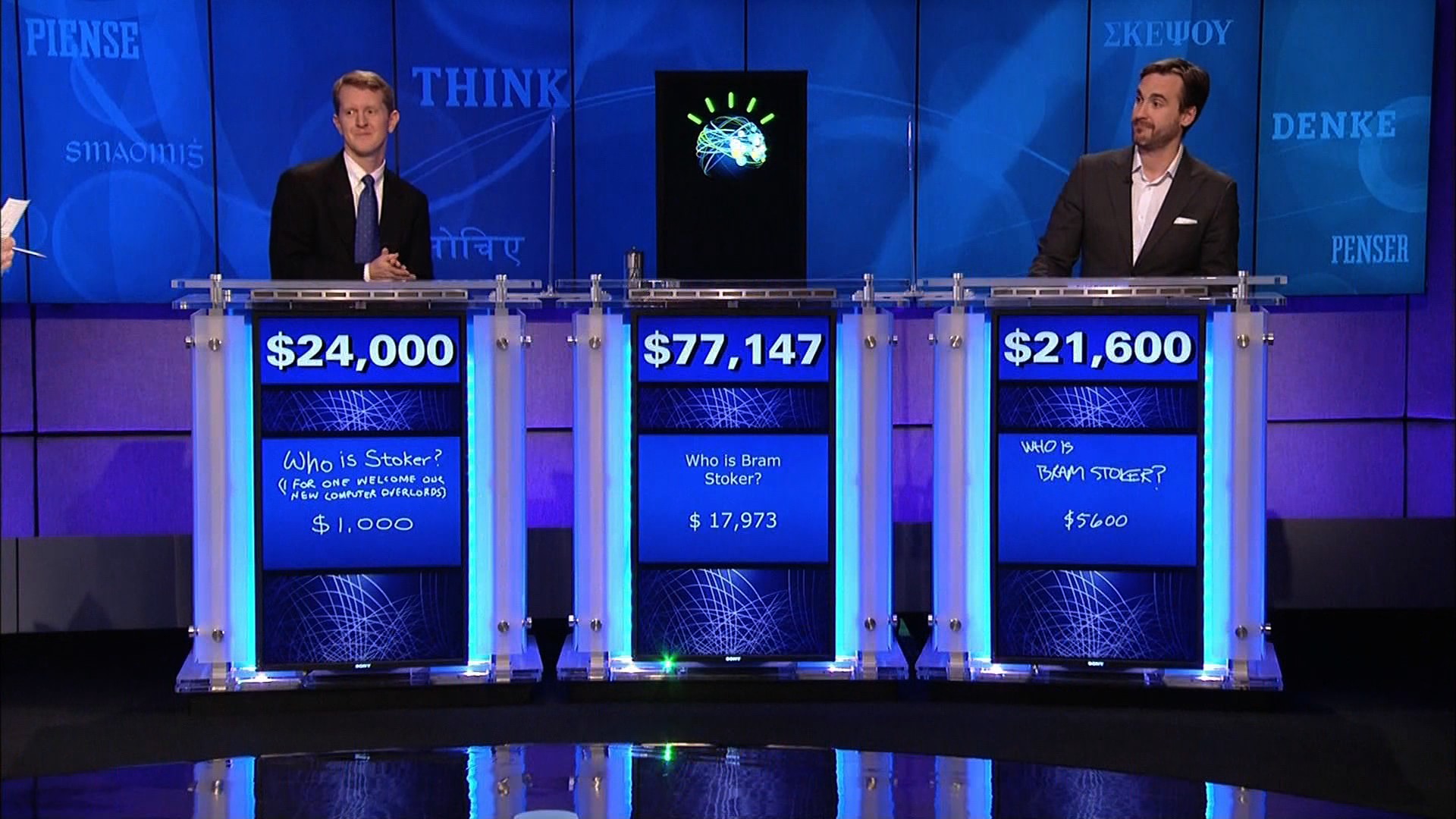
<p>If you've watched TV or walked through an airport over the course of the past 5 years, your probably seen advertisements for what IBM calls a "<a href="http://www.ibm.com/smarterplanet/us/en/?ca=v_smarterplanet">Smarter Planet</a>."  But perhaps because we do not really think about IBM as a consumer business these days, it's not exactly clear what exactly that Smarter Planet is.  Thanks to <a href="http://tbjones.com/">Terry Jones</a> and my Partner, Joel Cutler, I had the opportunity to attend a special IBM event, where they have sneak peak at what is to come. And perhaps it will come as no surprise to you, it begins with Watson (their <a href="https://www.youtube.com/watch?v=WFR3lOm_xhE">Jeopardy winning</a> super computer).</p>
<p>Watson is a technology platform for what IBM calls "cognitive computing."  Put simply, it allows developers to build applications that use Watson's brain to solve problems, much like they use Amazon's cloud for core infrastructural needs like storage.  Since demonstrating the technology's trivia acumen in late 2011, IBM has been working with number of pilot partners to demonstrate what the world can do with augmented intelligence.  And at the launch event, the company showcased prototypes of such products.  Probably the most viscerally powerful of such was in the medical arena, where IBM has <a href="http://www.mskcc.org/blog/msk-s-collaboration-ibm-watson-featured-cbs-morning">partnered with</a> Memorial Sloan-Kettering to build systems that aid in the both the detection of cancer and the prescription of which specific treatment is appropriate for the individual case in question. &nbsp;In a more recreational use case, Watson will create cooking recipies for users with only the suggestion of a single base ingredient, style of cuisine, or dietary restrictions.</p>
<p>Launching new divisions is not something IBM does lightly.  Similar transitions at the company occurred 50-60 years ago with the creation of a division for mainframe technology; in the 1980s around the personal computer; and in the 1990s around "Global Services" - the IBM's consultative practice for Fortune 500 corporations and governments.  IBM is in an elite class of technology companies (including Apple, Google, Amazon, and Cisco) for whom $1B in incremental revenue hardly gets their executive team out of bed. They need $10b opportunities (revealing just how hard it is to continue to drive growth).</p>
<p>Fortunately for New York City, in the Watson Group, IBM sees this potential.  For the past couple years, a large black glass construction project <a href="http://www.nytimes.com/2013/03/27/realestate/commercial/51-astor-place-rises-over-east-village.html?pagewanted=all&amp;_r=0">has been underway</a> in the Astor Place corridor in downtown Manhattan.  For anyone familiar with the area, the building is a total visual force, commanding attention and respect.  Until yesterday, that building was largely anonymous, without any clear markings of propriety.  Today, it is Watson.</p>
<p>In addition to housing their new team in their new downtown fortress, IBM is going to commit $1B of its own capital the developing the Watson Group over the next few years.  1,000 of its 3,000 person IBM Research team will be allocated to developing the technology.  And the company will be earmarking $100m in capital for equity investments in start-ups their fledgling Watson developer ecosystem. IBM will also be sponsoring some kind of start-up accelerator in their new space for Watson-based companies.</p>
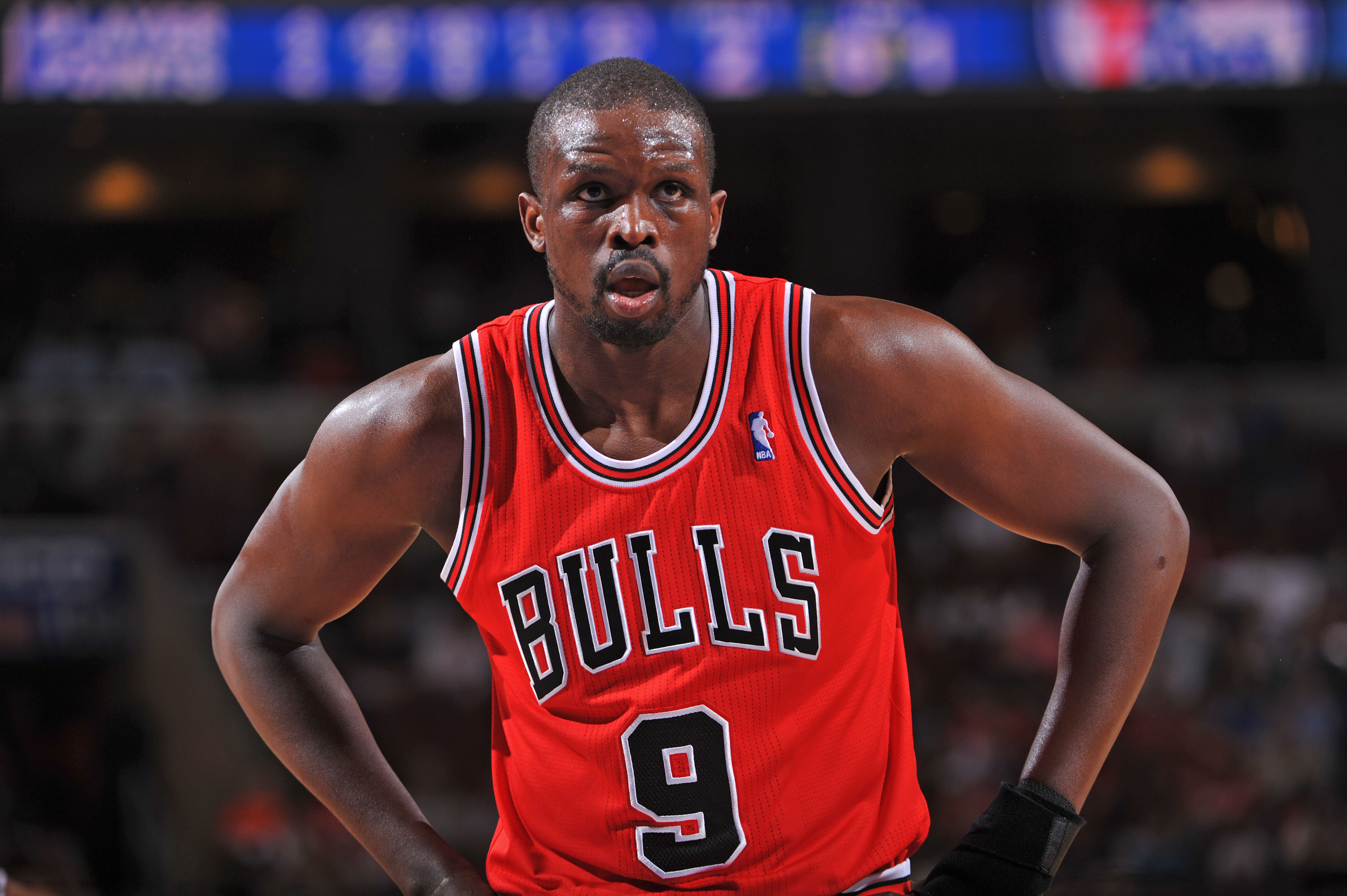
<p>Fundamentally game-changing innovation is so hard to do as a large company, I'm not sure how successful Watson will be. I do, however, respect the boldness of the vision and welcome the contributions to continue to build the technology ecosystem. It is exactly this sort of fundamental systems research and enterprise software development that we need.</p>]]></content:encoded></rss:item><rss:item rdf:about="http://slazar.com/thoughts/2014/1/7/parting-ways-with-winners.html"><rss:title>Parting Ways with Winners</rss:title><rss:link>http://slazar.com/thoughts/2014/1/7/parting-ways-with-winners.html</rss:link><dc:creator>Spencer Lazar</dc:creator><dc:date>2014-01-07T19:26:16Z</dc:date><dc:subject></dc:subject><content:encoded><![CDATA[<p>For any Chicago basketball fan, today is a sad day.  After 10 years as the Bulls' starting small forward, <a href="http://espn.go.com/nba/player/_/id/2429/luol-deng">Luol Deng</a>, <a href="http://espn.go.com/nba/story/_/id/10255605/cleveland-cavaliers-agree-trade-andrew-bynum-chicago-bulls-luol-deng">was traded</a> to the Cleveland Cavaliers in exchange for the expiring contract of Andrew Bynum, and a package of Draft picks.</p>
<p><span class="full-image-block ssNonEditable"><span><img style="width: 700px;" src="http://slazar.com/storage/Luol Deng.jpg?__SQUARESPACE_CACHEVERSION=1389119213665" alt="" /></span></span></p>
<p>For those who do not know me, I grew up in Chicago in the womb of the Michael Jordan era winning 6 Championships through my teenage years. Basketball was a religion in my family, and old Chicago Stadium and the United Center were like Church or Synagogue. I remember where I was for many of the teams big wins over that time frame.</p>
<p>Since then, the road has been rocky for my team to say the least - from <a href="http://www.dukechronicle.com/articles/2003/06/20/breaking-news-updated-1245-m-624-jason-williams-breaks-leg-accident">star athletes getting into career-ending motorcycle accidents</a> to <a href="http://chicitybs.com/2012/06/11/5-biggest-draft-busts-chicago-bulls-edition/">hyped high school prospects failing to reach their potentials </a>to <a href="http://bleacherreport.com/articles/1880865-derrick-roses-injury-just-latest-chapter-in-chicago-bulls-ongoing-nightmare">two years of fluke injuries to our MVP</a>.  Over that time horizon, however,  there has been one steady source of leadership,  energy, defense, scoring, and grit. And that has been our all-star, Luol Deng.  "Lu" (as he is called by his devotees) was the kind of guy you never want to see in another team's jersey.  Over his career, he was not only consistently a 18 point and 7 rebound guy, he was a tenacious defensive player. Whenever the Bulls would have to face a Kobe, Lebron, or Durant, Lu would be our show-stopper. And he played with incredible heart - averaging more than 40 minutes per game on the court (always close to, if not leading the league). He outlived multiple coaches, and helped lead the team to the Conference Finals. Had Derrick Rose been healthy, the current team would have been a Championship contender. People talk about getting "A's for effort" but Lu deserved an A+.</p>
<p>So, if Lu was such a winner, why trade the guy?  Today the Chicago Bulls made a management decision that we see all the time in the venture business with many of our best companies.  In short, the needs of the organization are bigger than any one individual - no matter how talented. With Derrick Rose out again and Lu moving into a contract year (where he should receive close to top dollar), the Bulls understood that they have to think about building the foundation for a successful organization for the next 10 years. While management has stood by their franchise player in Derrick Rose, they know that premium young talent will be key to the organization's longterm championship potential.</p>
<p>In world class technology companies, similar staff crossroads happen as well.  World-class engineers do not always make for world-class managers.  Sales teams accustomed to selling $10k SaaS licenses over the phone are not always the people that will close your multimillion dollar enterprise deal. &nbsp;They accountant that you hire to do your books, is not likely to scale to be your CFO.</p>
<p>These transitions are often tough for both companies and individuals. You may work with one another to try to find new roles and responsibilities. But often times, even key early leaders must move on. There are now <a href="http://www.forbes.com/fdc/welcome_mjx.shtml">countless stories of epic public departures</a> for such individuals from even companies they've founded.</p>
<p>My own wish at companies and sports teams alike is that we do what the Chicago Bulls have done and do the best to make the right human capital decisons for the present and future needs of the company (as hard and sometimes emotional as those decisons are).  But my hope is also that we do so honorably.  We should celebrate past contributions, and recognize that we would not be where we are today without them.</p>
<p>When I am fortunate enough to take one of my own kids to see the Bulls run in Chicago some day, I hope that when we look up, we see a #9 hanging from the rafters.</p>
<p>Thank you, Lu. And good luck.</p>
<p>&nbsp;</p>
<p>&nbsp;</p>]]></content:encoded></rss:item><rss:item rdf:about="http://slazar.com/thoughts/2014/1/6/hypothesis-the-best-vcs-are-happily-married.html"><rss:title>Hypothesis: The Best VCs are Happily Married</rss:title><rss:link>http://slazar.com/thoughts/2014/1/6/hypothesis-the-best-vcs-are-happily-married.html</rss:link><dc:creator>Spencer Lazar</dc:creator><dc:date>2014-01-06T20:01:26Z</dc:date><dc:subject></dc:subject><content:encoded><![CDATA[<p>Venture capital is what many call 'a people business.'  Investments decisions revolve around a number of factors, from market size &amp; forces to unit economics to technology. But particularly in the early stages of company development, people are the primary determinant of success or failure.</p>
<p>When making go vs. no-go decisons, investors always have imperfect information. You never know whether the girl or guy you are sitting across the table from truly has the hunger or the skill to change the world in a big way.  You don't know how they treat others, or how they behave when their back is against the wall.  How fast a learner are they?  Can they command the respect of people who are smarter than they are?  You may be able to answer some of your questions, but never all.  And no founder is perfect. At the end of the day, you have to just make a call.</p>
<p>The best investors in the world thrive in these circumstances. Some call it pattern recognition. Some call it gut.  Nailing one home run investment can be chalked up to luck. But the jedis of the venture world are master evaluators of people.</p>
<p>It is for this reason that I've developed the hypothesis that the best VCs are also happily married, in their personal lives. &nbsp;In evaluating a possible mate, you similarly have imperfect information. &nbsp;You don't know what parts of your significant other's character are malleable or rigid. You don't know how they will react to loss or failure. You don't know if they will be different in the presence of wealth or fame. You don't know whether or not they will really be a good parent, or how they will look and feel when they are old. &nbsp;We are all approximations of who we will once be, and in choosing a mate, we make our best guess.</p>
<p>I've had the opportunity of working with several world class venture investors in the past, and have generally found that they turn out to be truly happy in their marriages. Curious to know if you've found the same.</p>
<p>&nbsp;</p>
<p>&nbsp;</p>
<p>&nbsp;</p>]]></content:encoded></rss:item><rss:item rdf:about="http://slazar.com/thoughts/2014/1/2/the-great-purge.html"><rss:title>The Great Purge</rss:title><rss:link>http://slazar.com/thoughts/2014/1/2/the-great-purge.html</rss:link><dc:creator>Spencer Lazar</dc:creator><dc:date>2014-01-02T16:22:46Z</dc:date><dc:subject></dc:subject><content:encoded><![CDATA[<p>I am not a very spiritual person, but somehow I do believe in new beginnings. &nbsp;And as recently explored by <a href="https://twitter.com/mkonnikova">Maria Konnikova</a> in a <a href="http://www.newyorker.com/online/blogs/elements/2013/12/why-we-make-resolutions-and-why-they-fail.html">recent New Yorker article</a> on Resolutions, the New Year for me brings new possibilities. &nbsp;One of my goals for 2014 is to tame my inbox (another is to write more). &nbsp;It has just gotten out of control. &nbsp;Some of this will come through more disciplined communication, some through delegation, and some through finding creative ways to cut out clutter.</p>
<p>This morning, I used a clever product called <a href="http://www.unroll.me">Unroll.me</a>&nbsp;to do an audit of all of the email lists that I have signed up for over the course of the past 10-15 years. &nbsp;The product has been around for some time, but it really appears to have matured. &nbsp;After a few minutes of scanning my inbox, the service revealed that I was signed up for 498 lists (some of whom are list-serves and can get quite cattery). &nbsp;Note: This number does not even include the countless email lists that I have unsubscribed from manually.</p>
<p>Beyond the disgust resulting from how much unecessary clutter I get hounded with every day, the exercise demonstrated to me how much I value a few email newsletters. &nbsp;Whether their content is editorially created by a community (<a href="http://www.quora.com">Quora</a>), assembled factually by a community (<a href="http://www.crunchbase.com/">Crunchbase</a>), functionally in nature (<a href="http://www.followupthen.com/">FollowUpThen</a>), or written and curated by a single individual (<a href="http://ben-evans.com/">Benedict Evans's Newsletter</a>), email lists can still bring recipients a ton of joy and meaning. &nbsp;I'm very excited to have unsubcribed from the crap, but am super grateful for the thoughtful product execution and effort from those who've really tried.</p>
<p>Couple trends:</p>
<p>
<ul>
<li>News curation still has value in a Twitter world</li>
<li>For thought leaders who I do not want to miss, email is a great way to remind me of fresh content</li>
<li>It is definitely possible to build real functional value (beyond content) into email</li>
<li>It's amazing how many sub-email newsletters I've managed to get signed-up for from a single brand or source, increasing the rate at which they badger me.</li>
</ul>
</p>
<p>I'd love to know what email lists or newsletters you subscribe to and truly enjoy, and if there are any underlying trends that you identify on the positive or negative.</p>]]></content:encoded></rss:item><rss:item rdf:about="http://slazar.com/thoughts/2010/9/26/presentation-matters-pitchdeck-ui.html"><rss:title>Presentation Matters: Pitchdeck UI</rss:title><rss:link>http://slazar.com/thoughts/2010/9/26/presentation-matters-pitchdeck-ui.html</rss:link><dc:creator>Spencer Lazar</dc:creator><dc:date>2010-09-26T21:33:11Z</dc:date><dc:subject></dc:subject><content:encoded><![CDATA[<p><span class="full-image-float-left ssNonEditable"><span><img style="width: 300px;" src="http://slazar.com/storage/Sticky%20Fingers.jpg?__SQUARESPACE_CACHEVERSION=1285542754450" alt="" /></span></span></p>
<p>There are varying schools of thought as to what deliverables are required to attract the interest of an investor. Among them, the three most important ingredients are: the product demo, the financial model, and the pitch deck.</p>
<p>At the earliest stages of investing, many view the demo as a key reflection of a team's ability to articulate their vision. &nbsp;Jason Calacanis famously said that <a href="http://www.businessinsider.com/henry-blodget-jason-calacaniss-secret-investment-strategy-revealed-2010-3">he does not even look at business plans</a>. In the growth or later stages of funding, a company's financial performance is viewed as a leading indicator of both the attractiveness of the underlying market opportunity and the ability of the team in question to execute on that basis. &nbsp;Product is taken as a given here, and so demos lose relevance.<br /><br />Having spent time investing at each stage of the venture lifecycle, I am a big believer that a company's pitch deck is the most important means of securing capital (either in working capital for expansion or liquidity for founders or early shareholders). &nbsp;And while I am absolutely blown away by the quality of the entrepreneurs that I meet with and the products that they build, I continue to be underwhelmed by the quality of the materials used to present their vision.<br /><br />Pitch decks are sales documents. &nbsp;Think of them as a kin to the resume. &nbsp;Anyone that has ever hired anyone (or for that matter interviewed for a job) knows that a CV is tool used to tell a story. &nbsp;When that tool is not sharp (irrelevant content, poor formatting, lack of attention to the specifications of the job), the tool itself can get in the way of accomplishing the task for which it is used, and job applications wind up in the waste bin before even getting a substantive chance. &nbsp;A company's (and more specifically a CEO's) ability to sell is one of the most important proxies for its success. &nbsp;Sales are crucial to hiring (convincing overqualified people to take a career risk and join your venture), strategic partnerships (persuading large companies to take a chance on the little guy), future financings (key to most venture deals), and ultimate liquidity (getting buy-in from either acquirers or the public on an&nbsp;intrinsic&nbsp;strategic premium).<br /><br />Presentations are a tool used to excite and inform. &nbsp;Informing is a relatively well understood process in pitch deck creation, but excitement is an absolute rarity. Founders have the unfortunate challenge of dealing with often cynical fund managers who are constantly overwhelmed with the shear volume of opportunities that they see. &nbsp;While founders live and breathe the thrill of building their dream product or solving a central problem to their lives, it is safe to assume that the people you speak with in the venture community (tuned in as they may or may not be) do not have your company's sense of urgency coursing through their veins. &nbsp;And it is likely that your prospective customers, partners, and employees don't either. &nbsp;People of all types require selling.<br /><br />The great thing about the presentation is that it is a free form document. &nbsp;In many ways, it even subsumes other parts of the evaluation process such as the financial model and the product demo, as each can be expressed either directly or referentially within a linear page turn. &nbsp;But, while PowerPoint has to be one of the most important productivity tools of all time, its standard settings have created a near monotony in tones of discourse and vehicles of persuasion. &nbsp;I would love to see an embrace of a new pitch deck UI.<br /><br />If you are someone that looks at presentations often, you know a good pitch deck UI when you see it. &nbsp;Reading them, your heart can literally skip a beat. &nbsp;One of the original pitch deck UI pioneers of the internet era was a mentor of mine, <a href="http://www.linkedin.com/profile/view?id=374737&amp;authType=name&amp;authToken=hpf1">Josh Koppel</a>. &nbsp;Josh wrote a book in 2000 called <a href="http://www.amazon.com/Good-Grief-Josh-Koppel/dp/B000H2N7VK/ref=sr_1_1?s=gateway&amp;ie=UTF8&amp;qid=1285537988&amp;sr=8-1">Good Grief </a>that changed my life. While an Internet entrepreneur by trade, Josh introduced his format to the world as an autobiography. &nbsp;It reads like an adult picture book:&nbsp;few words on each page. &nbsp;Their interaction with deeply relevant imagery on each page teases the reader between the fascination of looking deeper and the excitement of the page turn. &nbsp;While Josh's book was physical in form, it translated magically into the digital realm. &nbsp;The mouse click became his page turn. The content turned professional. &nbsp;Used to pitch everything from TV pilots to new mobile apps to even his own company when need be, Josh showed me how exciting the story of a product or company can be - even if put together with conventional presentation creation tools (spoiler: <a href="http://www.apple.com/iwork/keynote/">Apple Keynote</a> is his layout tool). &nbsp;While I have learned from a number of others, no one has been more impactful in the development of my own style and appreciation for what is possible.<br /><br />So when you are preparing your next pitch deck, what some of the things you should consider? &nbsp;(1) Every design decision, like in your product, is just that, a choice. Use colors, graphs, fonts, and spacing carefully; (2) considering using imagery - pictures really catch people off guard if editorial instincts are strong, and they very much can be worth 1000 words; (3) consider non-linear formats - such as <a href="http://prezi.com/">Prezi</a>, if appropriate - although know that most investors would side with the utility of the print-out over the flash &amp; intrigue of an innovative non-linear narrative experience; (4) challenge yourself to keep it short (Fred Wilson suggests <a href="http://www.avc.com/a_vc/2010/06/six-slides.html">six slides</a> - although I'm comfortable with the looser definition of "leaving your audience wanting more"); (5) make sure that you show it to a few low risk people outside the venture community with little relevant experience to ensure the headline themes are clear; and (6) begin your investor conversations also with low risk audiences - either friends or those that are low on your wish list - for real-time debugging of UI. &nbsp;AB testing works here just as well as in software development.<br /><br />Happy to field questions or provide examples if folks are interested.</p>]]></content:encoded></rss:item><rss:item rdf:about="http://slazar.com/thoughts/2010/9/10/passing-on-people.html"><rss:title>Passing on People</rss:title><rss:link>http://slazar.com/thoughts/2010/9/10/passing-on-people.html</rss:link><dc:creator>Spencer Lazar</dc:creator><dc:date>2010-09-10T20:31:37Z</dc:date><dc:subject></dc:subject><content:encoded><![CDATA[<p>In the venture business, most of the opportunities we see, we pass on. &nbsp; As a general rule of thumb, for every 1000 investment leads, you want to meet 100. &nbsp;For every 100 you meet, 10 turn into deal-oriented&nbsp;conversation. &nbsp;For every 10 that get that far, 1 turns into a deal. &nbsp;There is nothing magical about the funnel, things just seem to work out that way.</p>
<p>There are tons of good reasons for passing (market size; defensibility of IP; absence of operating excellence - to name a few). &nbsp;But there is one legitimate justification that you will rarely see or hear explicitly from an investor - passing due to a lack of faith in the people behind the given project. &nbsp;<span class="full-image-float-right ssNonEditable"><span><img style="width: 250px;" src="http://slazar.com/storage/Plugging%20Ears.jpg?__SQUARESPACE_CACHEVERSION=1284230590764" alt="" /></span></span></p>
<p>This predicament is not unique to venture. &nbsp;In dating, the phenomenon is commonly expressed as "its not you, its me." In hiring, every once in a while, you will hear prospective employers say that things did not work out because there wasn't "a good fit." But, most of the time in venture, you do not even get that much. Why?</p>
<p>Entrepreneurs are one of the most impressive groups of people in the world. &nbsp;I would not do what I do if it weren't for the fact that I get to interact with so many of them so frequently. &nbsp;What makes them particularly special is their passion for what they are doing. &nbsp;Instead of working in traditional settings with benefits, job security, and a tried-and-true career trajectory, entrepreneurs go their own way to solve perceived problems with the way to world works. &nbsp;They will stop at nothing to see them fixed. Deal or no deal, a part of me always leaves meetings in awe. &nbsp;</p>
<p>When someone is reaching for their proverbial dreams, it feels almost cruel to tell them that the reason you believe they will not succeed is intrinsic to them. &nbsp;Instead, one typically hears&nbsp;camouflaged&nbsp;rationales steeped in common pitfalls (back to things like market, IP...). &nbsp;When businesses have meaningful operating history, sometimes we fall back on a lack of comfort with imperfect business metrics. &nbsp;At least then, the investor preserves optionality down the road, in the event that the entrepreneur someday matures into a marked success. &nbsp;</p>
<p>I try to be as transparent with people as possible. &nbsp;As passing on people will forever be a challenge in my life, I would be curious to know how you (entreprenuer, investor, or otherwise), handle this predicament. &nbsp;</p>
<p>Just like in dating, a pass from one person is not a reflection of the market. &nbsp;It is reflection of that person's indeosyncricies, standards, and outcome expectations. &nbsp;If you are as passionate as most of the entrepreneurs that I meet, you will find funding from someone, sooner or later.&nbsp;</p>]]></content:encoded></rss:item><rss:item rdf:about="http://slazar.com/thoughts/2010/8/28/data-portability-the-limits-to-geo-shrinkage.html"><rss:title>Data Portability &amp; The Limits to Geo-Shrinkage</rss:title><rss:link>http://slazar.com/thoughts/2010/8/28/data-portability-the-limits-to-geo-shrinkage.html</rss:link><dc:creator>Spencer Lazar</dc:creator><dc:date>2010-08-28T18:51:18Z</dc:date><dc:subject></dc:subject><content:encoded><![CDATA[<p>People talk about how small the world is. &nbsp;And, as communication &amp; information technologies have evolved, there is no question that if considered against the backdrop of the declining costs of interacting with those physically located at great distances, things certainly feel that way. &nbsp;With the reigns of broadcast media now in the hands of individuals (Twitter, Youtube, Quora...) and the formalization of social networks online (Facebook, LinkedIn, Foursquare), establishing and maintaining a ubiquitous digital presence has never been more scalable. &nbsp;<strong>But in the physical world, how 'small' things can get?</strong></p>
<p><strong><em>Small </em>is the experience of ownership and command of relationships in a given geography.&nbsp;</strong>Without living and breathing the same air as someone, how proximate can we be? &nbsp;Over the course of the past year, I moved from New York City to London (my 4th city in the past 7 years) - knowing hardly a soul on the other side of The Pond. In getting myself settled, <strong>I have come across a few structural constraints that in my mind limit this geo-shrinkage.</strong></p>
<p><strong>The first is physics. </strong>&nbsp;Our bodies can still only be a one geographic place at one time. &nbsp;By being in London, I am necessarily not in New York. &nbsp;While it is possible for me to pick up&nbsp;anecdotes from friends on the ground and in the media, there is a rumble to the sidewalk, a warmth to a hug, and scent of urban jungle that I miss while here. &nbsp;Although the most recent <a href="http://www.apple.com/iphone/gallery/ads.html">Apple ads</a>&nbsp;attempt to prove otherwise, moments of technology-enabled sympathy are not a substitute for the empathy made possible by geo-presence. &nbsp;</p>
<p><strong>The second is the force of community</strong>. &nbsp;No matter who you are, at some point you are likely to want to build or belong to one. &nbsp;Whether in the digital or physical realm, building takes work and belonging takes acceptance. &nbsp;Work requires time and energy, both of which are finite. &nbsp;</p>
<p>Although some aspects of community can be established online (this blog is case in point), still most of what we build has a manifestation in person. &nbsp;We build to see results. &nbsp;Because we cannot be in multiple places at once (back to physics), most of us choose to build in a single place, such that the fruits of our labor can be enjoyed. &nbsp;The consequence is that we are more provincial, and the shrinking of the world hits a limit. &nbsp;</p>
<p>To belong, a community needs to cement trust among its&nbsp;constituents - which is not doled out easily. Perhaps the most important&nbsp;ingredient&nbsp;to trust is commitment. &nbsp;If people think that you are a tourist (as recently referenced by <a href="http://www.sequoiacap.com/us/michael-moritz">Mike Moritz</a> &amp; <a href="http://paul.kedrosky.com/about/">Paul Kedrosky</a> in reference to <a href="http://paul.kedrosky.com/archives/2010/08/too_many_touris.html">transient members of the venture capital community</a>), they will rarely take you as seriously as a prospective member as someone who has long-term historical or prospective roots. &nbsp; Trust is won through the perception of permanence. &nbsp;By spreading ourselves geographically thin, we challenge our credibility and belonging becomes unlikely. &nbsp;If you have built nothing and do not belong to anything, the experience of local ownership is unattainable and we are forced back to living provincial lives.</p>
<p>The physics problem is not one that we are likely to overcome, but <strong>technology can do more to facilitate geo-shrinkage. &nbsp;The key is data portability.</strong> &nbsp;There are a number of reasons for me to have a single local doctor, accountant, dentist, and send my kids to the same school - some personal, some social, and some practical. &nbsp;But the most important reason is that when my 8 year-old needs his&nbsp;tonsils examined or my teenager requires remediation in pre-calculus, their respective doctors &amp; teachers have their entire respective medical &amp; pedagogical histories. &nbsp; This anecdote extends to nearly all pockets of life. &nbsp;We have traditionally been local beings living in provincial worlds because that is where we are known. &nbsp;But <strong>as technology companies <span style="font-weight: normal;">(e.g.&nbsp;</span><a href="http://www.knewton.com"><span style="font-weight: normal;">Knewton</span></a><span style="font-weight: normal;">&nbsp;in&nbsp;</span><a href="http://www.knewton.com"><span style="font-weight: normal;">education</span></a><span style="font-weight: normal;">, Facebook in social, and LinkedIn in professional)&nbsp;</span>develop standards for allowing us to carry our lifetime of data with us, we become more feasibly mobile</strong> . &nbsp;Each of us then requires less of an introduction. &nbsp;Trust is easier to establish. Communities open up. &nbsp;And, without permanently physically committing to a geography, we can shrink the world just a little bit further.</p>]]></content:encoded></rss:item><rss:item rdf:about="http://slazar.com/thoughts/2010/8/1/finding-equilibrium-in-the-flow.html"><rss:title>Finding Equilibrium in The Flow</rss:title><rss:link>http://slazar.com/thoughts/2010/8/1/finding-equilibrium-in-the-flow.html</rss:link><dc:creator>Spencer Lazar</dc:creator><dc:date>2010-08-01T11:21:32Z</dc:date><dc:subject></dc:subject><content:encoded><![CDATA[<p>It has many names. &nbsp;The stream. &nbsp;The pulse. &nbsp;The loop. &nbsp;I call it "the flow." &nbsp;</p>
<p>The flow is not just a feed of information - akin to those hosted by Twitter, Facebook, Foursquare or even legacy RSS readers.&nbsp;It is a personalized constellation of news, narrative, gossip, and opinion surrounding the issues that interest us most. &nbsp;All forms of available media have coefficient in the equation that defines it; email, television, newspapers, magazines, books, phone conversations, dinner table banter and water cooler chats. The momentum of the Flow builds because no matter one's professional, personal, or demographic disposition, there is always a benefit to sitting on the right side of&nbsp;asymmetric&nbsp;information. &nbsp;Being "in the Flow" is being in the know. &nbsp;</p>
<p>The Flow is a dynamic concept. &nbsp;Its pace is determined by the amount of&nbsp;underlying&nbsp;change and corresponding coverage in world events. &nbsp;Given the historical prohibitive costs of information production, distribution, and consumption - the Flow started off as a drip. &nbsp;Today, other than by transporting oneself into an episode of Mad Men, it is hard to imagine a time when it was appropriate to digest media&nbsp;<a href="http://www.newsweek.com/company/history-of-newsweek.html">by the week</a> - let alone hold our breath for the nightly news. &nbsp;Staying in the flow used to be a thing of leisure. &nbsp;But, with <a href="http://en.wikipedia.org/wiki/World_population">2 billion more</a> information producers (people alone) on the planet than existed just 20 years ago and the advances in technology affording new levels of interconnectedness, the Flow has reached the level of class 5 rapids. Keeping up takes work.</p>
<p>So what is the right balance? &nbsp;How many people can we actively "follow"; "friends" can we have; subscriptions can we maintain; or channels can we watch? &nbsp;How many tributaries can we allow to connect to the Flow before it becomes unmanageable? &nbsp;How much time should we be spending curating, monitoring, and building such information architectures before the very energy required to hold our heads above water is not enough? How do you know when the benefits of information consumption no longer exceed its costs? &nbsp;</p>
<p>Over time, some of the answer will come from next generation aggregation &amp; curation engines such as the <a href="http://www.huffingtonpost.com/">HuffingtonPost</a> and <a href="http://www.buzzfeed.com/">BuzzFeed</a>. &nbsp;Some of the answer will also come from technology. &nbsp;We will all go by the way of the Wall Street trader, whose proprietary platforms make trades without the need for human intervention - actively and independently learning from its mistakes. &nbsp;Put differently, technology will allow us to attain the benefits of the Flow without having to process each piece of data on our own (i.e. bill pay, home energy monitoring, health upkeep, and more). &nbsp; But, as the optimal level of human information consumption is a deeply personal decision, some elements of&nbsp;equilibrium&nbsp;will for the foreseeable future be determined by the individual. &nbsp;</p>
<p>I would be keen to understand how you manage your flow.</p>
<p><em>This post was deliberately focused on the notion of information consumption. &nbsp;This conversation is complemented &amp; complicated by the introduction of questions as to the appropriate amount of information production for the individual. &nbsp;These are extremely important interaction variables, which I will attempt to address in a future post.</em></p>]]></content:encoded></rss:item><rss:item rdf:about="http://slazar.com/thoughts/2010/7/4/publicity-is-not-cheap.html"><rss:title>Publicity is Not Cheap</rss:title><rss:link>http://slazar.com/thoughts/2010/7/4/publicity-is-not-cheap.html</rss:link><dc:creator>Spencer Lazar</dc:creator><dc:date>2010-07-04T10:02:35Z</dc:date><dc:subject></dc:subject><content:encoded><![CDATA[<p><span>Last week, </span><a href="https://twitter.com/johnbattelle"><span>John Battelle</span></a><span> observed something a bit unsettling to me. &nbsp;As one of the founders of </span><em><span>Wired Magazine</span></em><span>&nbsp;and CEO of web publishing &amp; marketing juggernaut&nbsp;</span><em><a href="http://federatedmedia.net/"><span>Federated Media</span></a><span>,&nbsp;</span></em><span>he is somewhat of a force in the technology ecosystem. Artfully squeezed into 140 characters, Battelle observed:</span></p>
<p><em><span><a href="https://twitter.com/johnbattelle/status/17226571288">"Very int. idea at #foocamp: we are in the first ever economy where privacy is dear, publicity is cheap. Large implications. Used to be the reverse."</a>&nbsp;</span></em></p>
<div></div>
<p><span>This is something of a summary of a broader argument that friend&nbsp;<a href="https://twitter.com/lessin">Sam Lessin</a>&nbsp;has been making </span><a href="https://drop.io/swl#">for a while now</a><span> (see his post from 01/17/10). &nbsp;While I cannot be sure that Sam is the ultimate source here, given that they were both at <a href="http://en.wikipedia.org/wiki/Foo_Camp">Foocamp</a> and that Sam is a fantastic curator of ideas with "large implications" (go to his <a href="http://www.meetup.com/BLKNY30/">Y+30</a> events to learn more), I think that it is fair to lump their arguments together. &nbsp;My working&nbsp;definition&nbsp;of publicity is the means by which an entity communicates with the broadest of audiences.</span></p>
<p>The publicity is cheap argument is based on the shifting microeconomics of content in the digital age. &nbsp;If Christopher Columbus wanted to broadcast a message to the entire world, it would be a lot cheaper for him to use Twitter than to turn around the Nina, the Pinta, and the Santa Maria. &nbsp;This much I agree with. &nbsp;Once Columbus composes his tweet, the incremental cost of sharing that Tweet to a 2nd, 3rd, and 4th person is low enough, that Twitter does not even charge for pushing content through its pipes. &nbsp;</p>
<p><strong>Shifting relative marginal costs are one thing, but costs of mass distribution are another.&nbsp;</strong>Marginal cost math assumes that the piping is in place for me to push my content out into the world. &nbsp;Britney Spears (5,226,390 Twitter followers) and Ashton Kutcher (<span id="follower_count" class="numeric stats_count">5,192,937&nbsp;</span>followers) have deeply established brands that have spent millions on personal marketing. &nbsp;The reason that the marginal cost economics have played out so well at scale for them is because their 'piping' is in place. &nbsp;But what if they wanted to reach 150MM people (~2.0% of the "entire world" &amp; 1.5x the number of registered Twitter users)? That would be a lot harder, and correspondingly&nbsp;significantly&nbsp;more costly. &nbsp;</p>
<p>Now think about being an independent recording artist trying to get your latest album into the world. &nbsp;You might turn to social media to begin to build your fan base, but after you have gotten your friends &amp; family to tweet about it and whatever industry contacts you have are exhausted, then publicity starts to get tough.&nbsp;<strong>Publicity economics for any content producer only scale according to the size of their underlying distribution infrastructure.</strong></p>
<p><strong>Low relative marginal cost publicity&nbsp;economics&nbsp;are also inversely proportional to the amount of noise that is being&nbsp;simultaneously&nbsp;being pushed through the global system. &nbsp;</strong>The more Britneys and Ashtons there are in the world, the harder it will be for even other highly public figures like Oprah (3,726,172 followers) to get their messages across - let along budding musician "Joe Stummer." &nbsp;And, the amount of noise in the public domain only appears to be getting worse - think <a href="http://en.wikipedia.org/wiki/Vuvuzela">Vuvuzela</a>. It feels like everyone has a message, and while attention spans are nimble, they are unlikely to be able to keep up.</p>
<p>Publicity is certainly&nbsp;<strong><span style="text-decoration: underline;">relatively</span></strong>&nbsp;cheap compared to the days of Christopher Columbus - or even simply the pre-internet era. &nbsp;My feeling, however, is that instead of thinking about the marginal costs to publicity&nbsp;asymptotically&nbsp;approaching zero, they will soon cease to fall further and may even increase over time.&nbsp;</p>
<p>What we saw with the emergence of Twitter and Facebook was the complete breakdown of traditional one-to-one &amp; one-to-many communication paradigms. &nbsp;They were not the creation of a better emailing services or the launch of new cable news channels. &nbsp;As such, there was a complete land-grab for would-be costly distribution rights at a time when very few people understood the mediums. &nbsp;This was genius insight of brands like CNN and individuals like Ashton (even if implicit). &nbsp;Until a new paradigm shifting/land-grab inducing media platform is launched -&nbsp;<strong>publicity is only going get more expensive.</strong></p>
<p>&nbsp;</p>]]></content:encoded></rss:item></rdf:RDF>